Liiike, first class photo bombing!!
(We might or might not know this former practicum student. Her name might or might not be Cassie Sturycz. She might or might not be working on her doctorate. . .)
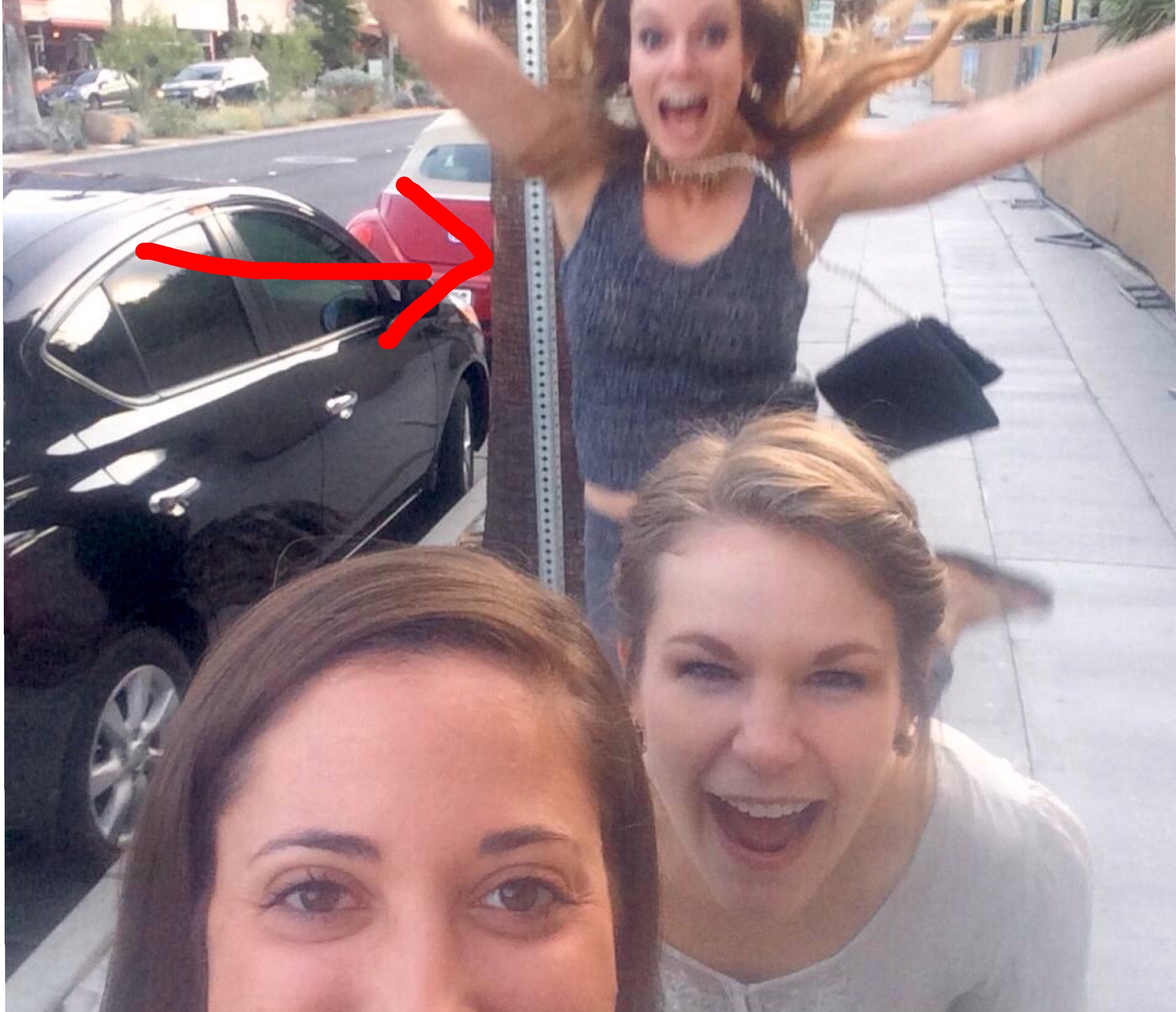
Liiike, first class photo bombing!!
(We might or might not know this former practicum student. Her name might or might not be Cassie Sturycz. She might or might not be working on her doctorate. . .)
How much do you know about anxiety? Have you bought into any of these myths? Here’s some information that might help!
|
Myth |
Truth |
| If I have a bad panic attack, I will pass out/faint. | It is very unlikely you will faint during a panic attack. Fainting is typically caused by a sudden drop in blood pressure and, during a panic attack, blood pressure actually rises slightly. |
| I should just avoid situations that stress me out. | Avoiding anxiety tends to reinforce the anxiety. When individuals avoid anxiety-provoking situations, they continue to believe they cannot manage or cope with those situations. |
| I’ll carry a paper bag in case I hyperventilate. | Paper bags (similar to as-needed medications) can become a safety crutch for anxiety. |
| Medication is the only treatment for my anxiety. | Therapy can also help to reduce worry and anxiety. In fact, research shows that a combination of cognitive-behavioral therapy (CBT) and medication can be the most effective treatment. |
| I’m just a worrywart and nothing can really help me. | Therapy can help anyone to learn a different relationship with their own thoughts, emotions, and behaviors. |
| If I eat well, exercise, avoid caffeine, and live a healthy lifestyle, my anxiety will just go away. | Healthy living can help with worry and anxiety; however, it cannot cure an anxiety disorder.
“You need more help than just reducing your stress. You may need to face your fears, learn new facts about your symptoms, stop avoiding, learn tolerance for some experiences, or change how you think, feel, and behave with respect to other people.” |
| My family is always reassuring and help me avoid stress, which helps me. | Similar to the paper bags, well-meaning friends and family can contribute to and prolong anxiety. Encouraging and supportive friends and family can better help by assisting an individual through anxiety and discomfort rather than helping avoid. |
Would you like some resources for anxiety? Some organizations with helpful resources include National Alliance on Mental Illness (NAMI), Anxiety and Depression Association of America (ADAA), International Obsessive Compulsive Disorder Foundation, Association for Behavioral and Cognitive Therapy, and National Institute of Mental Health (NIMH).
Anxiety and Depression Association of America. (2015). “Myth-conceptions,” or common fabrications, fibs, and folklore about anxiety.
Brittany Best, MA
WKPIC Doctoral Intern
In our society today, we are constantly connected to people near and far through technology and social media. Here at the hospital, we discuss improving social supports and interactions. Additionally, isolation can be a red flag. However, some interesting research indicates that some alone time may be beneficial for health and wellbeing.
Spending time on your own may:
Weingus, Leigh. (2015). ‘Alone time’ is really good for you.
Brittany Best, MA
WKPIC Doctoral Intern
Peer Support training states that there are ten guiding principles of recovery. One of these is the “relational” principle. It tells us that an individual’s chances of recovery are greatly increased if he or she has a strong foundation of support at home and in the community. This can be a difficult principle to achieve for many, as people often find themselves isolated when they leave institutions. Some patients have burned bridges they feel can’t be repaired. Family members may have abandoned them. In some cases, family wants to be involved, but with privacy laws, they are unable to help the patient regulate mediation or keep in touch with the patient’s doctors to find out about any progress or regression. Some patients entered the hospital not only because of mental illness, but also because of stress put on them from toxic people, sometimes family.
According to the Kentucky Peer Support training, through healthy relationships, a person with a mental illness or substance abuse disorder can find roles which can give him or her purpose through social interaction. Being a volunteer, a student, an employee, or a peer support can make one feel a greater sense of self and give one a better outlook on life. Becoming a part of an advocacy group can help others while empowering the individual as well.
When a mentally ill person or a person diagnosed with a substance abuse disorder cannot find support in a faith-based institution or with family, there are other organizations on which to lean. The National Alliance on Mental Illness has chapters across the country and may have support groups or day-time programs. There are also volunteer possibilities through them. The Depression and Bipolar Support Alliance (dbsalliance.org) also gives opportunities for people living with these illnesses to become facilitators of support groups and to volunteer and advocate on behalf of others with mental illnesses. The Schizophrenia and Related Disorders Alliance of America (sardaa.org) is yet another group.
There are many possibilities for a mentally ill person to integrate into the community, even if it is through social media at first. Any connection to groups of people with similar experiences helps. Any connections that allow for socialization and the promotion of friendships will help an individual in his or her recovery journey. The “relational” aspect of the recovery process is an important one.
Rebecca Coursey, KPS
Peer Support Specialist
Results yielded from a new study conducted by Georgia State University indicates that a person recovering from a recent stroke should undergo both physical therapy and mental practice (also known as motor imagery) in order to gain the most optimal results. Motor imagery is a mental rehearsal of a motor action without actually performing the action (while physical therapy involves using repetitive, task-oriented training on the body part that is impaired). The combination of physical therapy and motor imagery should be used to improve motor movement, balance, and coordination in individuals that have suffered a recent stroke.
For participants, the researchers employed the use of 13 older stroke survivors in addition to 17 healthy control participants. The participants from the stroke group were placed in two groups: 1) motor imagery only; or, 2) motor imagery and physical therapy. The treatment was given within 14 to 51 days of the participants’ stroke; each participant experienced 60 total hours of rehabilitation. To assess the effectiveness of each treatment, the participants in the stroke group and the control group underwent functional magnetic resonance imaging (fMRI) scans before and after each treatment.
During normal brain functioning, there are multiple cortical areas of the brain that communicate with each other; however, following a stroke, these interactions are disrupted. After a stroke, there is damage to brain cells; it can take a long time for the neurons to grow back, if they grow back at all. Dr. Butler, a faculty member at Georgia State University, stated that when attempting physical therapy many stroke patients are unable to move at all. Therefore the treatment teams often incorporate motor imagery, as if the stroke patients simply think about moving that area of the body, it helps keep the neurons active near the area that died in the brain. Results obtained from this study indicated that the individuals in the stroke group that participated in both physical therapy and motor imagery had a significant increase in the flow of information between several brain regions.
It’s interesting that simply thinking about something can produce such beneficial and even tangible outcomes. What other areas of health can this notion be applied towards?
Faisal Roberts, M.A.
WKPIC Doctoral Intern
Pedersen, T. (2015). Both Physical Therapy, Mental Practice Important in Stroke Recovery. Psych Central. Retrieved on April 13, 2015, from http://psychcentral.com/news/2015/04/13/both-physical-therapy-mental-practice-important-in-stroke-recovery/83468.html