
Friday Factoids: Promising Long-Term Treatment for PTSD


Post-traumatic stress disorder (PTSD) can result from being the victim or witness to a number of traumatic events including war, an automobile accident, physical abuse, assault, homicide, and other difficult or devastating experiences. It is an equal opportunity disorder and affects men, women, and people of all cultures similarly. In the United States, PTSD has been thrown into the limelight due to the number of service men and women who are returning from active duty with this condition. The current publicity around PTSD has left many in the medical and mental health fields looking to and for variations of treatment in hopes of finding more effective, longer-lasting methods to treat this illness.


One of the more promising treatments, currently in Phase 2 of 3 in testing, is MDMA-Assisted Psychotherapy. MDMA (3,4-methylenedioxymethamphetamine) is a psychedelic, synthetic substance noted for its capability to help patients delve into their excruciating memories. The drug reportedly facilitates trust and compassion between the patient and therapist, all the while greatly reducing the patient’s feelings of defensiveness and terror while in session. It is believed that MDMA is able to offer this therapeutic safe haven by stimulating the release of hormones (prolactin and oxytocin) linked to bonding and trust which comforts the patient and reduces symptoms of avoidance and panic.


According to the research data, an astounding 83% of participants who received the treatment no longer met the guidelines for PTSD while in Phase 2 of the study.  Additionally, many of those participants reported the results lasted 3 ½ years or longer. So, why is this treatment not already approved and readily available for those who so desperately need it?


One potential answer to that question could be the stigma surrounding MDMA.  Most all of you have heard it referred by it street names of “Molly” or  “ecstasy.” And given so, some will not be comfortable using it as an aid during therapy even in a controlled setting providing such positive, long-term results. Secondly, the cost and time frame for each individual trial is fairly massive.  The End of Stage 2 meeting is estimated to take an additional 3 years and $2.3 million before presenting results to the FDA. Afterwards, Stage 3 is speculated to have a price tag of $15.8 million and spanning 5 years until the treatment is fully available for use with the public.


References
MDMA-Assisted Psychotherapy. (n.d.). Retrieved September 9, 2015, from http://www.maps.org/research/mdma


Treating PTSD with MDMA-Assisted Psychotherapy – Home. (n.d.). Retrieved September 8, 2015, from http://www.mdmaptsd.org/index.html


Crystal K. Bray, B.S.
WKPIC Doctoral Intern
Friday Factoids (Catch-Up): Special K–Are There Any Positives?


It was not the beginning of the zombie apocalypse that we were witnessing on the news a couple of years ago. Believe it or not, it was worse. Apparently, possible consumption of human flesh is one of the many unwanted side effects of abusing the anesthetic, Ketamine. “Special K”, as it is known on the streets, underwent a transformation into the new party drug, and it has been taking its place alongside opiates, benzodiazepines, and marijuana with teens and twenty-somethings since about 2010. Since that time, this once surgically “essential” and publically unknown drug has been drawing vast amounts of negative media, criminal and medical attention—but are there any positives associated with this drug?


Recently, scientists, mental health and medical professionals have discovered that medically controlled doses of Ketamine are very beneficial in treating Major Depressive Disorder and Bipolar Disorder. Yes, the same medication approved as an anesthetic in 1970, the same drug that has been abused to get high since the 2010’s, is providing evidence-based results that it does, in fact, reduce depression and regulate mood. Studies have shown that it produces significant results within a matter of minutes to hours instead of 2-3 weeks, which is the window within which standard pharmacological treatments for mood typically show benefits. Additionally, patients suffering from suicidal ideation who were treated with a “medically controlled dose” of Ketamine (medically controlled dose being key) reported their symptoms drastically reduced in 40 minutes, with gains lasting about 4 hours. Clinics around the U.S. are even currently treating patients suffering from depression and mood disorders using controlled amounts of Ketamine (yes, this is legal).


So Ketamine does appear to have some positives with respect to potential uses in the treatment of both unipolar and bipolar mood issues. It potentially provides treatment results, time frames and options for practitioners and patients, but the key appears to be the controlled dosing.


Reference
DiazGranados, N., Ibrahim, L., Brutsche, N., Ameli, R., Henter, I., Luckenbaugh, D., . . . Zarate, JR, C. (n.d.). Rapid Resolution of Suicidal Ideation after a Single Infusion of an NMDA Antagonist in Patients with Treatment-Resistant Major Depressive Disorder. J Clin Psychiatry., 71(12), 1605-1611. Retrieved September 7, 2015, from https://nebula.wsimg.com/5f3b6cc5e31881bab9f0fb5d070d35d2?AccessKeyId=98358B1A7BDF604FD210&disposition=0&alloworigin=1


Ketamine Facts, Effects and Treatment | Ketamine Clinics – Los Angeles, CA. (n.d.). Retrieved September 9, 2015.


Crystal K. Bray, BS
WKPIC Doctoral Intern


Around Hopkinsville: Tobacco War Pilgrimage September 25 & 26

Hopkinsville, Kentucky is “black tobacco country,” where many farms still exist, supplying the cured leaf used to make chewing tobacco. This time of year, crops are heading to barns to hang in the rafters, with coals and wood smoking well on through Thanksgiving. People new to the area sometimes think the smoking barns are on fire!


The Pennyroyal Area Museum posted this feature today on Facebook:


10625070_967019293320916_5150474274102392188_nToday in Hoptown’s History
1907: The Hopkinsville Kentuckian reported that Night Riders had raided the Bainbridge district of the county. The newspaper described a terrifying scene of 75 masked, heavily armed men who visited a farmer to encourage him to join the Tobacco Association. The farmer was given until the next day to join – and was instructed to have it printed in the newspaper so that everyone could see it. He was also given a list of his neighbors that he was to en…courage to do the same.


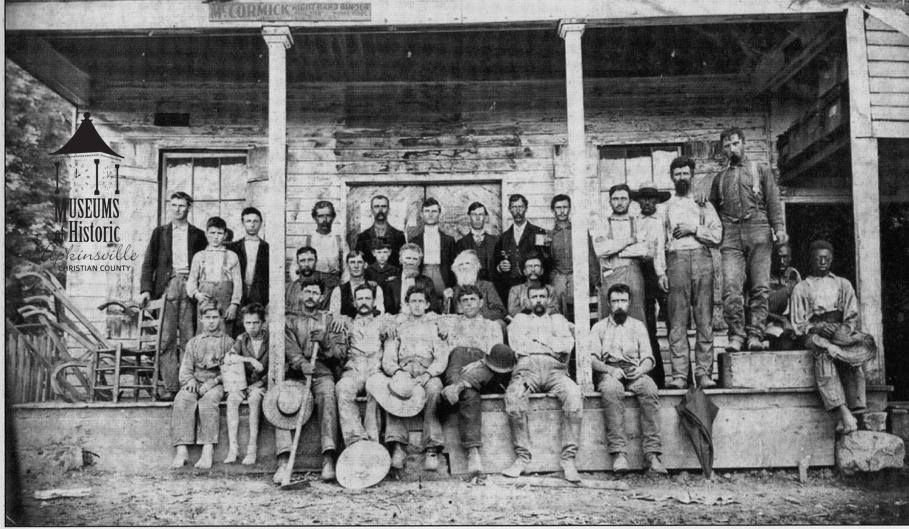
The Night Riders visited two additional farmers that night. Their tactics worked. The newspaper reported 8 new members of the Tobacco Association on this date 108 years ago. This photo (from Gilkey & Turner’s book Christian County) shows the P’Pool and Woosley country store in Bainbridge in the same time period.


Want to learn more about the Night Riders? Come to the Museum’s http://www.museumsofhopkinsville.org/tobaccowar2015


Former Intern Checks In


Dr. Best, class of 2014-2015, reports from Hawaii that a) she has a cold but a cold in Hawaii is better than a cold anywhere else, and b) she and her husband will shortly go swimming with sea turtles.

I wish I could claim that WKPIC prepared her for THAT experience, but alas, I just get to brag that we had her before the post-doctoral position in paradise stole her away.


IMG_0008 IMG_0009