
Surviving Match: Personal Stories

The MATCH process can be an overwhelming experience for many students.  Perhaps students become overwhelmed because internship preparation represents the final hurdle and course requirement before life as a professional psychologist begins.  In many cases, students become overwhelmed having heard past horror stories from friends or read previous articles that highlighted frightening statistics about the lack of internship sites; especially APA accredited sites. Whatever the case, I’m sure you have heard your share of stories.  As a fellow student and current intern, I’m writing to share my personal experience with you. I am hopeful that my story will show how persistence, vigilance, and determination pays off despite what may appear as a hopeless situation.


I am an older African American male, married, with two sons. I decided to leave a career in the Military to pursue my dream of earning a Psy.D.  I was eligible to apply for the MATCH in 2010 for the 2011-2012 internship year.  As expected, I was thrilled to have reached that point in my clinical training.  Having gone through several internship preparation seminars/meetings,  I  followed the advice of faculty and submitted  an average amount of applications; approximately 15-20.  I was confident that I would MATCH in the first round. Gosh, was I wrong.  Although I was called for either in-house or telephone interviews at several sites, I still did not MATCH. I was angry, sad, worried, and lacked confidence. It was a hard pill to swallow knowing that my friends were selected and I was not. Despite it all, I re-applied for phase 2.  Again, I submitted an average number of applications and was anxious to hear whether I would receive invitations to interview.  Needless to say, I was invited to interview at only one APA accredited site.  I interviewed via telephone and was selected to begin internship on July 1, 2011. I was overwhelmed by excitement and again believed in my abilities.  I packed my belongings, kissed my wife and kids, and travelled halfway around the country eager to begin.  Initially, all went well on internship as I met the other interns and staff. After completing orientation, I was ready to meet clients.


Approximately 3 months into internship, the unthinkable happened. Family issues compelled me to resign. I was devastated, depressed, and thought that my future as a professional psychologist was over.  Although my internship site supported my decision to resign, I was embarrassed to inform my school’s clinical director and APPIC about the resignation. My initial thought was that I “blew it.” I would never be given another shot. Negative thoughts consumed me and I ruminated repeatedly over my decision to resign. I decided that family was more important to me than my career.  As an older student, I questioned my decision of returning to school. As family issues persisted, I experienced negative thoughts that I failed.  After contemplating my future, I expressed interest to my school that I wanted to re-apply for internship. I was told that I would not be eligible to apply for the 2012-2013 MATCH.


During my year off, I underwent several embarrassing committee meetings. The committee required me to write courses of action to ensure a successful internship experience if given a second chance.  Basically, I was under the microscope for one year.  During that year, I re-told my family’s situation over and over again to anyone who asked. I was told by individuals that “I gravely jeopardized my career as a future psychologist.”  I continued to write courses of action and re-told my story despite negative comments from professionals of various disciplines.


After one year, I received the endorsement from my school and was granted permission to re-apply for the 2013-2014 internship year. I updated my CV, cover letters, and application in the Aug/Sept 2012 timeframe. I submitted to 35 sites. Of the 35 sites, I received 11 invitations to interview; 8 APA accredited and 3 non-APA.  I was selected in the first round by a non-APA site.


Whether you are not selected in Phase I or Phase II, my heartfelt advice to you is to press on and not give up until you have totally exhausted all of your resources.  Also, I have found that students may become discouraged after being selected to a non-APA site.  I’m here to inform you that non-APA sites provide valuable skills and necessary tools that are useful to function as a competent and well-informed psychologist. Furthermore, being selected to a non-APA site is not  a negative reflection of you as a student or as a person.  It does not mean that you are a failure, inadequate, or not competitive among your peers. Rather, it means that you have made it to the next phase of your journey.  I’m hopeful that my personal testimony will instill persistence and faith in your abilities as you begin the APPIC process and ultimately completing your educational goals.



Virtual Realty and Schizophrena: A New Twist on Social Skills Training


Social skills training is commonly used when treating an individual diagnosed with schizophrenia. However, there are disadvantages to using traditional social skills approach, particularly related to the individual’s motivation. Technology is increasingly used in the treatment of mental disorders. Studies have found Virtual Reality (VR) to be effective in the treatment of some anxiety disorders. Since the early 2000s, researchers are exploring the idea of using similar VR technology in the assessment and treatment of schizophrenia. In the domain of social skills training, VR technology could potentially improve the participant’s motivation during training. Additionally, the participant no longer has to rely on his or her imagination during social skills training as participants interact with virtual avatars to practice skills.


Park et al. (2011) developed a study to compare social skills training using VR role-playing (SST-VR) to traditional social skills training role-playing (SST-TR). Participants were recruited from an adult psychiatric inpatient hospital in Korea after receiving stabilization treatment for two to four weeks. Participants were randomly assigned to either the SST-VR group (n=46) or the SST-TR group (n=45). Symptom severity was assessed before and after social skills training. Both groups received 10 semiweekly sessions over the course of five weeks. Of the 10 sessions, five sessions focused on conversation skills training, three focused on assertiveness skills training, and two focused on emotional expression skills training. Sessions were conducted as 90 minute group sessions consisting of four to five participants in the group. The only difference between the two groups was the modality of role-playing. In the SST-VR group, participants interacted with virtual avatars in a virtual environment, whereas in the SST-TR group, participants interacted with therapist actors. Voice quality, nonverbal skill, and conversational properties were the primary measures assessed during training. Self-report measures of motivation and interest in the training were also assessed.


Park et al. (2011) found that SST-VR participants had more interest in participating in the training and had a higher attendance rate compared to the SST-TR group. The researchers found that overall social skills improved regardless of training received. However, when considering the subcategories, SST-VR participants showed a greater improvement in the conversational skills domain, whereas the SST-TR participants showed a greater improvement in the vocal and nonverbal domains. The researchers hypothesized that modeling skills demonstrated by the therapist during traditional role-playing and difficulty providing accurate feedback during VR role-playing due to the VR equipment blocking the participants’ faces led to the discrepancy in scores in certain domains. It is also important to consider the participants’ perception of the role-playing task. Individuals in the SST-VR group reported feeling less anxious and more powerful than normal when interacting with virtual avatars, which is a significant advantage over traditional role-playing.


Park et al. (2011) concluded that VR role-playing is unable to completely replace traditional role-playing at this time but could in the future with advances in technology.


Park, K., Ku, J., Choi, S., Jang, H., Park, J., Kim, S. I., & Kim, J. (2011). A virtual reality application in role-plays of social skills training for schizophrenia: A randomized, controlled trial. Psychiatry Research, 189, 166-172.


Danielle McNeill, M.S., M.A.
WKPIC Doctoral Intern


Friday Factoids: Alcohol Can Be Deadly, Especially for Men


According to the World Health Organization (WHO), there were almost 2,250,000 alcohol-related deaths worldwide in 2004.  In the United States, over 30% of male deaths between the ages of 15 and 29 were associated with alcohol-related causes.  10-19.9% of US males who drank alcohol within the past year had engaged in heavy episodic drinking.  Whereas, US females engage in heavy episodic drinking less than 5% of the time.


For more information about how the United States compares to the rest of the world, visit the WHO’s website.


Cassandra A. Sturycz, B.A.
Psychology Practicum Student


Where Do Interns Live at WKPIC?


One thing many interns never consider is what kind of office space they’ll have. Will it be completely individual? Ever-shifting? Communal?


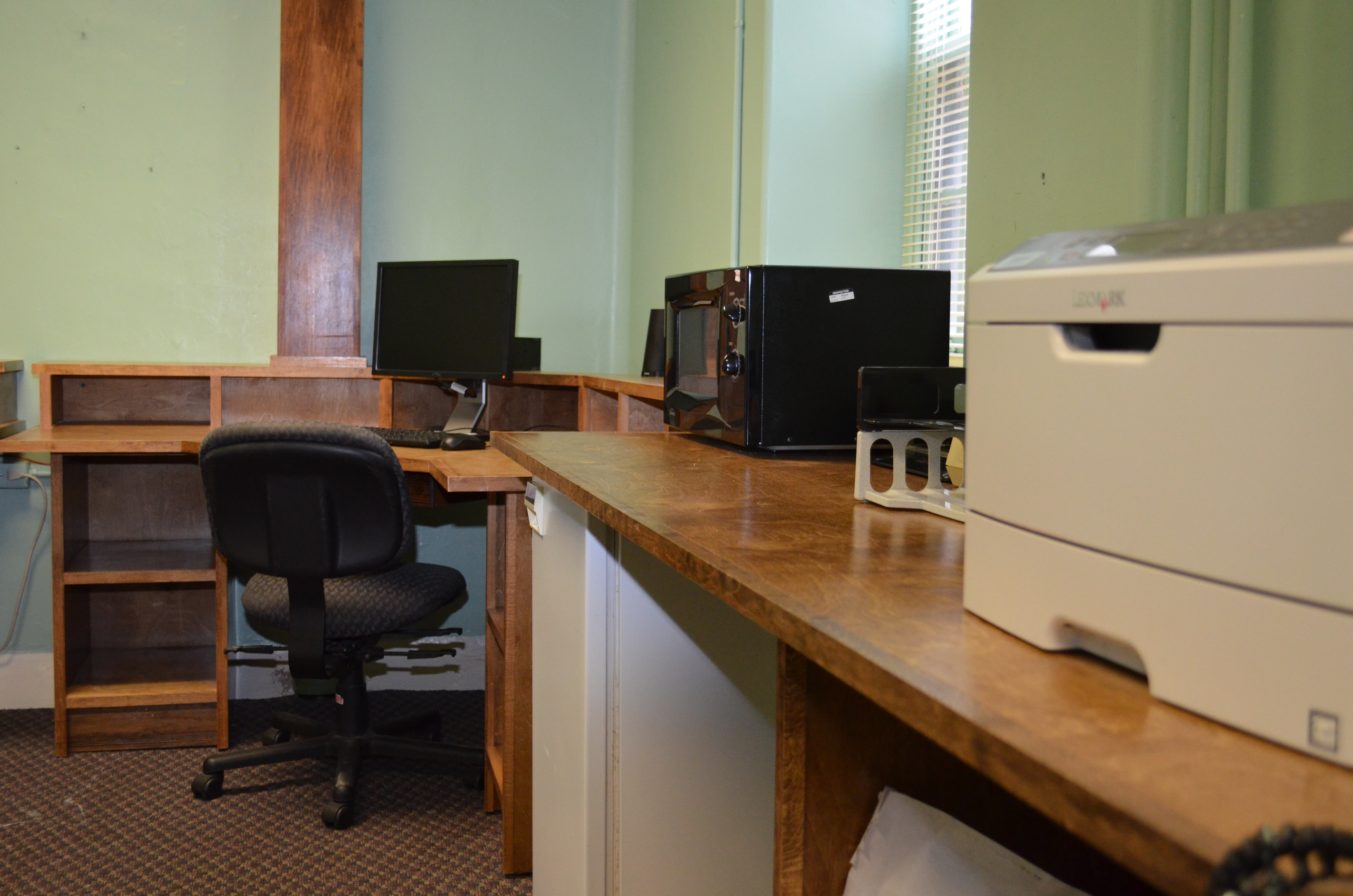
In the past, we have tried all three methods, and finally settled on communal at the state hospital rotation, and individual at the community mental health rotation. As the primary office space at the state hospital site, we renovated a large room and constructed four work stations to accomodate our interns and practicum students. Each work station has cubbies, bookshelves, a locking drawer, and a space to personalize. There are file cabinets for all, and office supplies.

DSC_0680


Also, as you can see in the photo, students have their own printer–and a few perks, like a refrigerator and microwave. It wouldn’t do to have starving students. And along those lines, the beautiful space is also next to an entrance and parking lot (if you could see the size of the building, you would understand how wonderful this is)–and directly beside the cafeteria where students can still eat lunch for $1.00.


So far the reviews of the new workspace have been positive. Former students = envious and current students = happy! A win all around. We find that the space makes it easy for students to share information, learning, and resources. I think they also relax, socialize, and support each other, too.  Special thanks to the maintenance department at the hospital, and to administrative support Karen Forester, who employed her superhero design and decorating skills to make it lovely. Additional thanks to IT, for hanging upside-down like Batman to get the computer wiring done–and fast, too.


Life in 159 year old buildings is always a challenge. Consider this one met!


Stay tuned for more pictures in the future, as we attempt to catch elusive wild interns at work and play in their natural habitat…


Congratulations, Dr. Marsh!


It’s a week for big events for WKPIC students and alumni.imagesCA0F8NMD


Completing a 7-year journey, Erik Marsh,  2012-2013 intern, has received his doctorate. Hooray, Dr. Marsh!  We’re thrilled that you stayed in the area to work at PMHC, and we hope you’ll join our internship faculty in the future. You’re a natural teacher and an all-around great guy.