Friday Factoids: Does the “H” in ADHD Really Impair Learning?

Recent models of Attention-Deficit Hyperactivity Disorder (ADHD) have challenged the notion that excess gross motor activity (hyperactivity) impedes learning with children diagnosed with ADHD.  Rather, newer models argue that excess motor activity may be compensatory.


A recent study conducted by Saver, Rapport, Kofler, Raiker, and Friedman (2015) compared 29 boys diagnosed with ADHD to 23 boys with no psychiatric diagnosis on a series of working memory tasks (i.e., participants were shown numbers and letters on a computer screen and asked to order them, while being recorded on a high speed camera for later behavior/movement coding).  The data indicated higher rates of gross motor activity positively predicted phonological working memory performance in children with ADHD.  Such was not seen in children with no psychiatric diagnoses.  In fact, boys with no ADHD diagnosis with increased movement performed more poorly on the cognitive tasks.  Thus, indicating a link between hyperactivity and task performance in children with ADHD.


Saver et al. (2015) conclude that excess movements are necessary to how children with ADHD remember information and process cognitive tasks.  The implications here are vital to recommendations given specific to behavioral intervention and current classroom management of behavior for children with ADHD.  In that, if these findings are confirmed, the authors caution against overcorrecting excess gross motor activity for children with ADHD.   Such activity may even be reinforced during select academic tasks.  Of course, the authors do not recommend allowing extreme movements (e.g., running around the room); rather they argue to facilitate movement in order to maintain alertness to complete cognitive tasks (University of Central Florida, 2015).


These findings implicate that past behavior plans and expectations/goals of reduced activity may be misguided, instead movement perhaps should be permitted in order to maintain alertness.  Overall, data support a new conceptualization that gross motor activity may facilitate cognitive functioning for children with ADHD, rather than impair it.  This research is limited by only sampling boys ages 8-12.  It is further limited by only assessing phonologically based activity; future research is anticipated to look at the impact of hyperactive movement in relation to visuospatial working memory (Saver, Rapport, Kofler, Raiker, & Friedman, 2015).  Overall, these finding again support new models of ADHD that conceptualize excess motor activity as compensatory.


Sarver, D. E., Rapport, M. D., Kofler, M. J., Raiker, J. S., & Friedman, L. M. (2015). Hyperactivity in attention-deficit/hyperactivity disorder (ADHD): Impairing deficit or compensatory behavior? Journal of Abnormal Child Psychology. Advanced online publication. doi: 10.1007/s10802-015-0011-1


University of central Florida. (2015). Kids with ADHD must squirm to learn, study says. Retrieved from www.sciencedaily.com/releases/2015/04/150417190003.htm


Dannie S. Harris, M.A., M.A., M.A.Ed., Ed.S.
WKPIC Practicum Trainee
The Role of Wellness Recovery Action Plans in Recovery


Wellness Recovery Action Plans or “WRAP” were developed by Mary Ellen Copeland, PhD, after years of research and her own personal fight with what was then called manic depression.  She learned coping skills which helped her begin to live a productive life, but not before experiencing hospitalizations and many trials and errors of medications.  Her struggles sound very familiar.  She developed a plan which outlined triggers, symptom monitoring, patient rights issues, and personal supports.


The WRAP is a tool which covers the key concepts of recovery: hope; personal responsibility; education; self-advocacy; and support.  One section of it is called the “Crisis Plan” and is extremely relevant to someone who finds him/herself hospitalized.  Sitting down with a patient and completing this plan puts a diagnosis in perspective.  It covers descriptions of when the patient is feeling well, symptoms that show that he or she may no longer be able to make decisions on his or her own, what person should take over at that time, and what person should NOT take over at that time.


The WRAP also covers patient right issues.  It goes over acceptable medications and unacceptable medications, asking also for reasoning.  The WRAP states treatments that are okay, facilities that are preferred if hospitalization is needed, and what the person needs his or her supporters to do if a hospitalization occurs.  It really covers everything that a person may not be able to communicate when in a crisis situation.


The WRAP is connected to a copyrighted workbook.  There are generic versions available.  If one were to make a basic outline with the issues discussed, that may be enough to help a person develop a plan for the future.


Rebecca Coursey, KPS
Peer Support Specialist

“Recovery is a process of change through which individuals improve their health and wellness, live a self-directed life, and strive to reach their full potential.”        SAMHSA

Friday Factoids: Is “Hangry” Really a Thing?

Most people have heard the new and popular term “hangry,” but what does it really mean? Do people really feel angry just because they are hungry? Absolutely!


If you haven’t experienced this feeling yourself, you may have been around a spouse, parent, child, or friend when they were hungry and seemed to be needlessly angry. Research has also been done to confirm people do get “hangry” when they’re in need of some food.


In one interesting study, participants were given the opportunity to blast their partners with loud, irritating noises or to stick pins in a voodoo dolls representing their spouse. The study found the lower the level of glucose in the participants’ blood (glucose is derived from the food we eat and low levels can indicate the body has used up its food) the higher the intensity and long duration of the noise they gave to their spouse and the greater number of pins they stuck into the voodoo doll. In fact, “people with the lowest blood sugar levels stuck more than twice as many pins in the voodoo dolls compared to people with the highest levels.”


Van Buren, Alex. (2014). “Hangry is a real thing.” Retrieved from https://www.yahoo.com/food/hangry-is-a-real-thing-82802959390.html


Brittany Best, MA
WKPIC Doctoral Intern


Compassion Fatigue

As a Peer Support Specialist, I have to be very cautious about taking care of myself.  Yes, I am in recovery, but I am not cured. I still have what is considered a serious mental illness.  If I were to forget to take my medication for a few days or go without sleep, the symptoms of Bipolar could return.  Stress is also a major factor.  Therapy while working in a full-time job position is very important to my health.


I recently attended a conference for Peer Support Specialists across the state.  I attended a workshop entitled, “Compassion Fatigue.”  Occupations in which people must work with those who are experiencing trauma can experience this.  Emergency room nurses, mental health clinicians, social workers, Peer Support Specialists, and other fields in which compassion is a constant job requirement can experience Compassion Fatigue.  One woman told her story of such an experience.


Some of the symptoms of this fatigue, according to the Compassion Fatigue Awareness Project, are “apathy, bottled up emotions, substance abuse, and isolation from others.” In an organization or institution, the fatigue can result in:

  • High absenteeism
  • Constant changes in co-workers relationships
  • Inability for teams to work well together
  • Desire among staff members to break company rules
  • Outbreaks of aggressive behaviors among staff
  • Inability of staff to complete assignments and tasks
  • Inability of staff to respect and meet deadlines
  • Lack of flexibility among staff members
  • Negativism towards management
  • Strong reluctance toward change
  • Inability of staff to believe improvement is possible
  • Lack of a vision for the future


When I first began seeing my therapist, he said I came into his office in terrible shape.  The point is…I got better, but it took work.  Therapy is awesome and I think anyone can benefit.  I definitely have, and I talk about how it helped me to my peers, (the patients), in the hospital.


Rebecca Coursey, KPS
Peer Support Specialist


Friday Factoids: Dangerous New Synthetic Drug


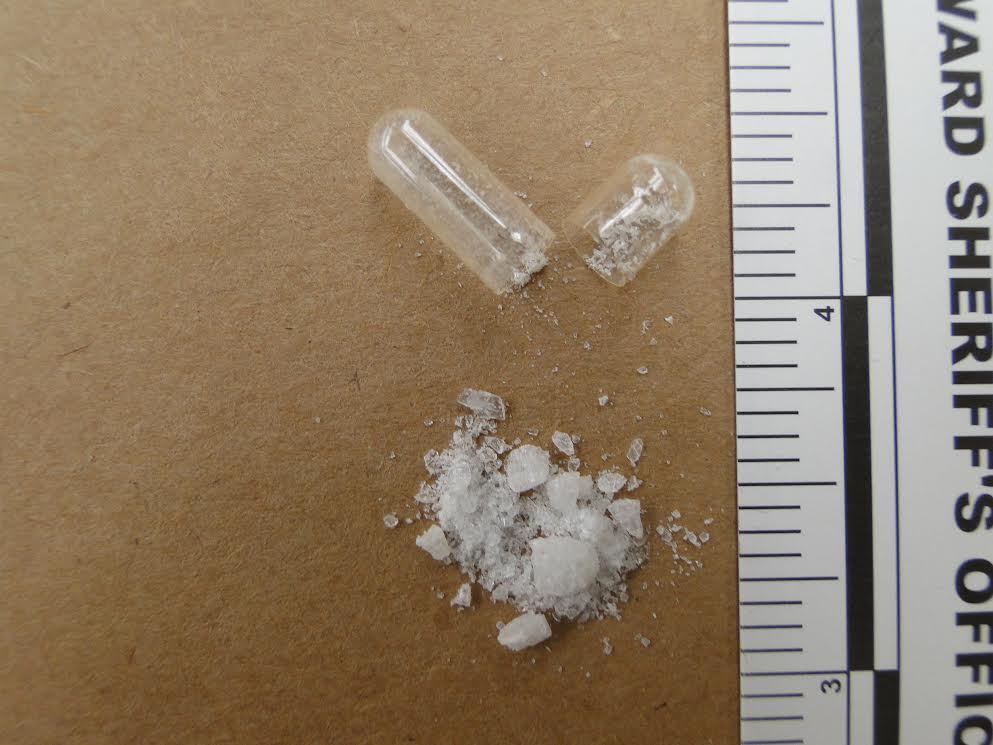
‘Flakka’ is a new synthetic drug that has recently been moving across the country and may soon find itself in Kentucky (and the effects in our hospital and area). News articles have reported that about a year ago, police officers had never heard of the drug. However, it has recently been called an “epidemic” in Florida and has crossed into Tennessee.


Flakka has been described as similar to bath salts. A report stated, “they get an initial high and when the high wears off, that is when hallucinations start. They are experiencing super human strengths.” Individuals who have taken Flakka tend to believe they are being chased, can be aggressive, and have been described as having no fear. A police officer noted, “A taser is not effective, verbal commands not effective, pepper spray not effective, and you don’t know what extreme you are going to be in.”


Flakka has become popular because it seems to be easily attainable and cheap (some sources saying $5-$10).One story reported a man felt he was being chased and, in an attempt to get into a police station, began to climb over a fence and impaled his leg on the fence. A couple of news stories are listed below for more information. It may be beneficial for us to be familiar with the symptoms of this drug as we may soon see people who have used it. Flakka does not appear on a typical drug screen panel, so it may not be easily identifiable.


http://www.wptv.com/news/region-c-palm-beach-county/west-palm-beach/cops-battle-flakka-crazy-street-drug


http://news.yahoo.com/naked-paranoids-begging-police-save-them-thats-flakka-092502635.html


Brittany Best, MA
WKPIC Doctoral Intern