
Friday Factoids: Cognitive Behavioral Therapy for Insomnia

Insomnia has a high prevalence rate, with 5% to 15% of adults meeting diagnostic criteria (Trauer, Qian, Doyle, Rajaratnam, & Cunnington, 2015).  The impact is not limited to nighttime problems; rather, it can be considered a 24-hour problem that is known to affect functioning throughout the day (Morin, 2015).  Furthermore, insomnia is also a significant risk factor for adverse health, psychological, and occupational problems (Morin, 2015).


Insomnia has been linked to anxiety and depression (Trauer et al., 2015). Often solutions or treatment of insomnia are related to pharmacological aid, with approximately 6-10% of adults in the US using hypnotics in 2010 (Trauer et al., 2015).  Yet, given concerns of side effects and addictive properties of benzodiazepines, alternative interventions are being studied.  Specifically, Cognitive-Behavioral Therapy for insomnia (CBT-i) has been shown to be an effective alternative to pharmaceuticals.


In general, CBT-i has five components:  Cognitive Therapy, focusing on identifying negative beliefs about sleep and explaining how these beliefs relate to insomnia, then identifying alternative thoughts; Stimulus Control, attempting to maximize the association between the bed and sleep through behavioral changes (e.g., avoiding stimulating activity in the bedroom, such as watching television or using the computer); Sleep Restriction, behavioral instruction advising patients to only go to bed when sleepy in order to minimize lying awake time; Sleep Hygiene, educating and discussing good sleep practices (e.g., avoid daytime naps); and finally, Relaxation, teaching relaxation skills to use before bed (Trauer et al., 2015).


To investigate the efficacy of CBT-i, Trauer, Qian, Doyle, Rajaratnam, and Cunnington (2015) completed a systematic review and meta-analysis to examine the outcome of CBT-i compared to pharmacological interventions.  Results indicate that after participating in CBT-i, patients fell asleep faster (19.03 minutes), spent less time awake in the middle of the night (26 minutes less), got more sleep overall (increase of 7.61 minutes), and improved self-efficacy about sleep by 9.91 percent. The authors concluded that CBT-i demonstrated similar levels of improvement compared to benzodiazepines for treatment of insomnia (Trauer et al., 2015). Of note, the authors did not compare CBT-i to other sleep aids (i.e., Z drugs or non-benzodiazepines [Lunesta, Ambien]), due to limited data regarding the long-term effects of such medications.


Overall, CBT-i was noted to be more sustainable overtime compared to pharmacological treatment and reported no adverse outcomes.  Given that CBT-i requires more effort and commitment when compared to taking a pill, it becomes necessary to determine if CBT-i has a beneficial impact on quality of life, fatigue, and psychological distress (Morin, 2015).  Ultimately, these findings demonstrate the efficacy of CBT-i and provide patients with a choice regarding treatment for insomnia.


Morin, C. M. (2015). Cognitive behavioral therapy for chronic insomnia: State of the science versus current clinical practices. Annals of Internal Medicine. Advance online publication. doi: 10.7326/M15-1246


Trauer, J. M., Qian, M. Y., Doyle, J. S., Rajaratnam, S. M. W., & Cunnington, D. (2015). Cognitive behavioral therapy for chronic insomnia: A systematic review and meta-analysis. Annals of Internal Medicine. Advance online publication. doi: 10.7326/M14-2841


Dannie S. Harris, M.A., M.A., M.A.Ed., Ed.S.
WKPIC Practicum Trainee

The Role of a Recovery Story in Peer Support

The sharing of one’s “Recovery Story” is the foundation upon what the rest of peer support is built.  A Recovery Story is the telling of the personal journey the Peer Support Specialist has been on in order to reach the point of health and integration into the community, or whatever “recovery” means to that person.  A Recovery Story is different than a story about one’s illness.


BrightA story simply about one’s illness concentrates on the negative aspects of mental illness and only about the struggles.  A Recovery Story shares the challenges faced, sometimes the tragedies, at times the struggles with symptoms or diagnoses, but it leads to a point of positive conclusion.  A Recovery Story shared gives hope to another individual, and lets another person know that one should never give up on the possibilities that life has to offer.


I share parts of my story every day; I share the good and the bad experiences.  I share the tragedies and the triumphs.  I share what I did or how I reacted in certain circumstances.  I tell about the symptoms that I exhibited in the most difficult times of my illness.  Sharing this story puts the other person at ease and lets them know it is okay to open up and talk about their own experiences.  Every once in a while, it may give another person hope that it is not only possible to get better, but it is expected that they will eventually live a full and productive life.


Rebecca Coursey, KPS
Peer Support Specialist


Friday Factoids: Does the “H” in ADHD Really Impair Learning?

Recent models of Attention-Deficit Hyperactivity Disorder (ADHD) have challenged the notion that excess gross motor activity (hyperactivity) impedes learning with children diagnosed with ADHD.  Rather, newer models argue that excess motor activity may be compensatory.


A recent study conducted by Saver, Rapport, Kofler, Raiker, and Friedman (2015) compared 29 boys diagnosed with ADHD to 23 boys with no psychiatric diagnosis on a series of working memory tasks (i.e., participants were shown numbers and letters on a computer screen and asked to order them, while being recorded on a high speed camera for later behavior/movement coding).  The data indicated higher rates of gross motor activity positively predicted phonological working memory performance in children with ADHD.  Such was not seen in children with no psychiatric diagnoses.  In fact, boys with no ADHD diagnosis with increased movement performed more poorly on the cognitive tasks.  Thus, indicating a link between hyperactivity and task performance in children with ADHD.


Saver et al. (2015) conclude that excess movements are necessary to how children with ADHD remember information and process cognitive tasks.  The implications here are vital to recommendations given specific to behavioral intervention and current classroom management of behavior for children with ADHD.  In that, if these findings are confirmed, the authors caution against overcorrecting excess gross motor activity for children with ADHD.   Such activity may even be reinforced during select academic tasks.  Of course, the authors do not recommend allowing extreme movements (e.g., running around the room); rather they argue to facilitate movement in order to maintain alertness to complete cognitive tasks (University of Central Florida, 2015).


These findings implicate that past behavior plans and expectations/goals of reduced activity may be misguided, instead movement perhaps should be permitted in order to maintain alertness.  Overall, data support a new conceptualization that gross motor activity may facilitate cognitive functioning for children with ADHD, rather than impair it.  This research is limited by only sampling boys ages 8-12.  It is further limited by only assessing phonologically based activity; future research is anticipated to look at the impact of hyperactive movement in relation to visuospatial working memory (Saver, Rapport, Kofler, Raiker, & Friedman, 2015).  Overall, these finding again support new models of ADHD that conceptualize excess motor activity as compensatory.


Sarver, D. E., Rapport, M. D., Kofler, M. J., Raiker, J. S., & Friedman, L. M. (2015). Hyperactivity in attention-deficit/hyperactivity disorder (ADHD): Impairing deficit or compensatory behavior? Journal of Abnormal Child Psychology. Advanced online publication. doi: 10.1007/s10802-015-0011-1


University of central Florida. (2015). Kids with ADHD must squirm to learn, study says. Retrieved from www.sciencedaily.com/releases/2015/04/150417190003.htm


Dannie S. Harris, M.A., M.A., M.A.Ed., Ed.S.
WKPIC Practicum Trainee
Friday Factoids: Is “Hangry” Really a Thing?

Most people have heard the new and popular term “hangry,” but what does it really mean? Do people really feel angry just because they are hungry? Absolutely!


If you haven’t experienced this feeling yourself, you may have been around a spouse, parent, child, or friend when they were hungry and seemed to be needlessly angry. Research has also been done to confirm people do get “hangry” when they’re in need of some food.


In one interesting study, participants were given the opportunity to blast their partners with loud, irritating noises or to stick pins in a voodoo dolls representing their spouse. The study found the lower the level of glucose in the participants’ blood (glucose is derived from the food we eat and low levels can indicate the body has used up its food) the higher the intensity and long duration of the noise they gave to their spouse and the greater number of pins they stuck into the voodoo doll. In fact, “people with the lowest blood sugar levels stuck more than twice as many pins in the voodoo dolls compared to people with the highest levels.”


Van Buren, Alex. (2014). “Hangry is a real thing.” Retrieved from https://www.yahoo.com/food/hangry-is-a-real-thing-82802959390.html


Brittany Best, MA
WKPIC Doctoral Intern


Friday Factoids: Dangerous New Synthetic Drug


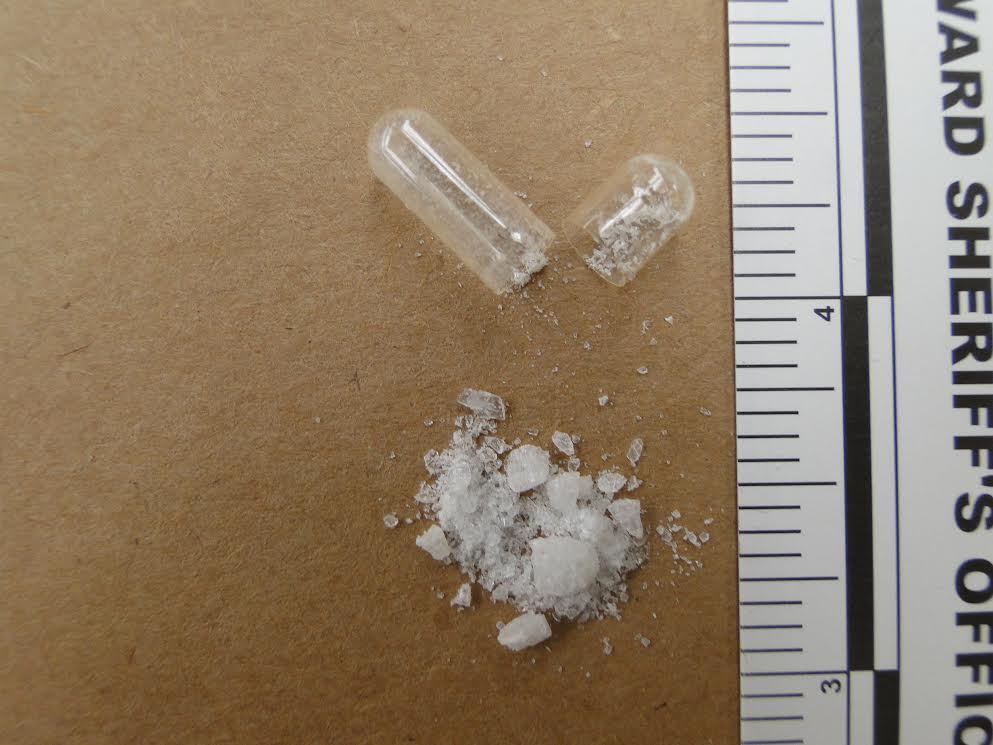
‘Flakka’ is a new synthetic drug that has recently been moving across the country and may soon find itself in Kentucky (and the effects in our hospital and area). News articles have reported that about a year ago, police officers had never heard of the drug. However, it has recently been called an “epidemic” in Florida and has crossed into Tennessee.


Flakka has been described as similar to bath salts. A report stated, “they get an initial high and when the high wears off, that is when hallucinations start. They are experiencing super human strengths.” Individuals who have taken Flakka tend to believe they are being chased, can be aggressive, and have been described as having no fear. A police officer noted, “A taser is not effective, verbal commands not effective, pepper spray not effective, and you don’t know what extreme you are going to be in.”


Flakka has become popular because it seems to be easily attainable and cheap (some sources saying $5-$10).One story reported a man felt he was being chased and, in an attempt to get into a police station, began to climb over a fence and impaled his leg on the fence. A couple of news stories are listed below for more information. It may be beneficial for us to be familiar with the symptoms of this drug as we may soon see people who have used it. Flakka does not appear on a typical drug screen panel, so it may not be easily identifiable.


http://www.wptv.com/news/region-c-palm-beach-county/west-palm-beach/cops-battle-flakka-crazy-street-drug


http://news.yahoo.com/naked-paranoids-begging-police-save-them-thats-flakka-092502635.html


Brittany Best, MA
WKPIC Doctoral Intern