Friday Factoids: Is “Hangry” Really a Thing?

Most people have heard the new and popular term “hangry,” but what does it really mean? Do people really feel angry just because they are hungry? Absolutely!


If you haven’t experienced this feeling yourself, you may have been around a spouse, parent, child, or friend when they were hungry and seemed to be needlessly angry. Research has also been done to confirm people do get “hangry” when they’re in need of some food.


In one interesting study, participants were given the opportunity to blast their partners with loud, irritating noises or to stick pins in a voodoo dolls representing their spouse. The study found the lower the level of glucose in the participants’ blood (glucose is derived from the food we eat and low levels can indicate the body has used up its food) the higher the intensity and long duration of the noise they gave to their spouse and the greater number of pins they stuck into the voodoo doll. In fact, “people with the lowest blood sugar levels stuck more than twice as many pins in the voodoo dolls compared to people with the highest levels.”


Van Buren, Alex. (2014). “Hangry is a real thing.” Retrieved from https://www.yahoo.com/food/hangry-is-a-real-thing-82802959390.html


Brittany Best, MA
WKPIC Doctoral Intern


Compassion Fatigue

As a Peer Support Specialist, I have to be very cautious about taking care of myself.  Yes, I am in recovery, but I am not cured. I still have what is considered a serious mental illness.  If I were to forget to take my medication for a few days or go without sleep, the symptoms of Bipolar could return.  Stress is also a major factor.  Therapy while working in a full-time job position is very important to my health.


I recently attended a conference for Peer Support Specialists across the state.  I attended a workshop entitled, “Compassion Fatigue.”  Occupations in which people must work with those who are experiencing trauma can experience this.  Emergency room nurses, mental health clinicians, social workers, Peer Support Specialists, and other fields in which compassion is a constant job requirement can experience Compassion Fatigue.  One woman told her story of such an experience.


Some of the symptoms of this fatigue, according to the Compassion Fatigue Awareness Project, are “apathy, bottled up emotions, substance abuse, and isolation from others.” In an organization or institution, the fatigue can result in:

  • High absenteeism
  • Constant changes in co-workers relationships
  • Inability for teams to work well together
  • Desire among staff members to break company rules
  • Outbreaks of aggressive behaviors among staff
  • Inability of staff to complete assignments and tasks
  • Inability of staff to respect and meet deadlines
  • Lack of flexibility among staff members
  • Negativism towards management
  • Strong reluctance toward change
  • Inability of staff to believe improvement is possible
  • Lack of a vision for the future


When I first began seeing my therapist, he said I came into his office in terrible shape.  The point is…I got better, but it took work.  Therapy is awesome and I think anyone can benefit.  I definitely have, and I talk about how it helped me to my peers, (the patients), in the hospital.


Rebecca Coursey, KPS
Peer Support Specialist


Friday Factoids: Dangerous New Synthetic Drug


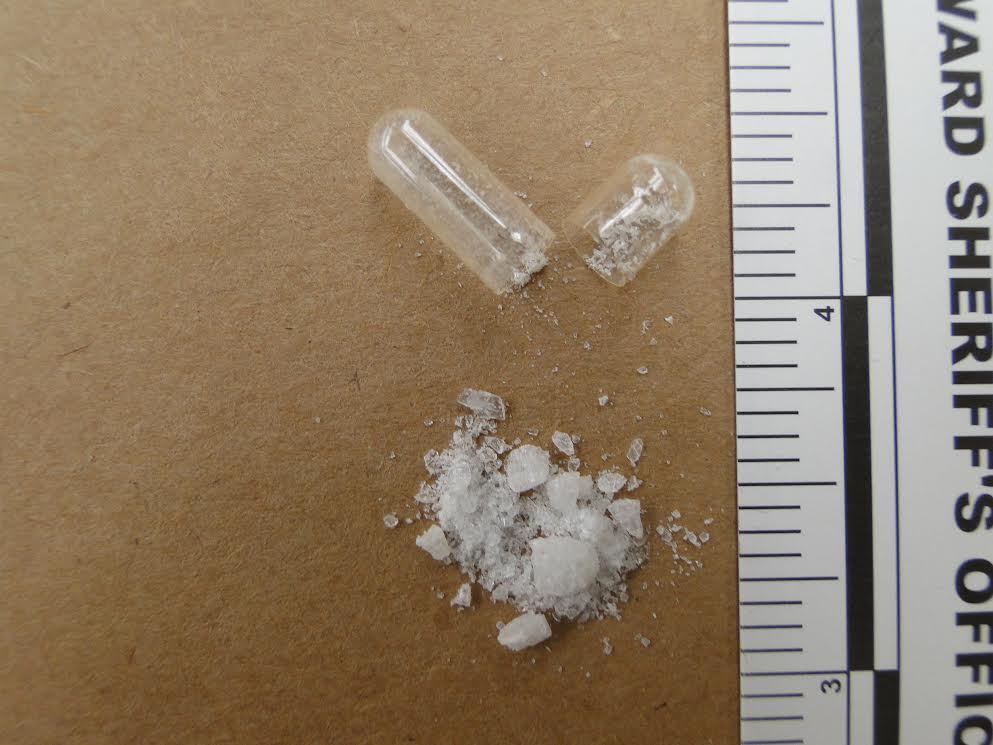
‘Flakka’ is a new synthetic drug that has recently been moving across the country and may soon find itself in Kentucky (and the effects in our hospital and area). News articles have reported that about a year ago, police officers had never heard of the drug. However, it has recently been called an “epidemic” in Florida and has crossed into Tennessee.


Flakka has been described as similar to bath salts. A report stated, “they get an initial high and when the high wears off, that is when hallucinations start. They are experiencing super human strengths.” Individuals who have taken Flakka tend to believe they are being chased, can be aggressive, and have been described as having no fear. A police officer noted, “A taser is not effective, verbal commands not effective, pepper spray not effective, and you don’t know what extreme you are going to be in.”


Flakka has become popular because it seems to be easily attainable and cheap (some sources saying $5-$10).One story reported a man felt he was being chased and, in an attempt to get into a police station, began to climb over a fence and impaled his leg on the fence. A couple of news stories are listed below for more information. It may be beneficial for us to be familiar with the symptoms of this drug as we may soon see people who have used it. Flakka does not appear on a typical drug screen panel, so it may not be easily identifiable.


http://www.wptv.com/news/region-c-palm-beach-county/west-palm-beach/cops-battle-flakka-crazy-street-drug


http://news.yahoo.com/naked-paranoids-begging-police-save-them-thats-flakka-092502635.html


Brittany Best, MA
WKPIC Doctoral Intern


Friday Factoids: Myths and Truths about Anxiety Disorders


How much do you know about anxiety? Have you bought into any of these myths? Here’s some information that might help!


Myth

Truth

If I have a bad panic attack, I will pass out/faint. It is very unlikely you will faint during a panic attack.   Fainting is typically caused by a sudden drop in blood pressure and, during a   panic attack, blood pressure actually rises slightly.
I should just avoid situations that stress me out. Avoiding anxiety tends to reinforce the anxiety. When   individuals avoid anxiety-provoking situations, they continue to believe they   cannot manage or cope with those situations.
I’ll carry a paper bag in case I hyperventilate. Paper bags (similar to as-needed medications) can become a   safety crutch for anxiety.
Medication is the only treatment for my anxiety. Therapy can also help to reduce worry and anxiety. In   fact, research shows that a combination of cognitive-behavioral therapy (CBT)   and medication can be the most effective treatment.
I’m just a worrywart and nothing can really help me. Therapy can help anyone to learn a different relationship   with their own thoughts, emotions, and behaviors.
If I eat well, exercise, avoid caffeine, and live a   healthy lifestyle, my anxiety will just go away. Healthy living can help with worry and anxiety; however,   it cannot cure an anxiety disorder.

“You need more help than just reducing your stress. You   may need to face your fears, learn new facts about your symptoms, stop   avoiding, learn tolerance for some experiences, or change how you think,   feel, and behave with respect to other people.”

My family is always reassuring and help me avoid stress,   which helps me. Similar to the paper bags, well-meaning friends and family   can contribute to and prolong anxiety. Encouraging and supportive friends and   family can better help by assisting an individual through anxiety and   discomfort rather than helping avoid.


Would you like some resources for anxiety? Some organizations with helpful resources include National Alliance on Mental Illness (NAMI), Anxiety and Depression Association of America (ADAA), International Obsessive Compulsive Disorder Foundation, Association for Behavioral and Cognitive Therapy, and National Institute of Mental Health (NIMH).


Anxiety and Depression Association of America. (2015). “Myth-conceptions,” or common fabrications, fibs, and folklore about anxiety.


Brittany Best, MA
WKPIC Doctoral Intern


Friday Factoids: Balance Between “Alone Time” and “Isolation”


In our society today, we are constantly connected to people near and far through technology and social media. Here at the hospital, we discuss improving social supports and interactions. Additionally, isolation can be a red flag. However, some interesting research indicates that some alone time may be beneficial for health and wellbeing.


Spending time on your own may:


  1. Make you more creative.
    “Decades of research have consistently shown that brainstorming groups think of far fewer ideas than the same number of people who work alone and later pool their ideas,” Keith Sawyer, a psychologists at Washington University in St. Louis.
  2. Make you work harder.
    The concept of “social loafing” suggests that people put in less effort when others are involved in the task.
  3. Be the key to your happiness (IF you are an introvert).
    “For introverts, most social interactions take a little out of that cup instead of filling it the way it does for extroverts. Most of us like it. We’re happy to give, and love to see you. When the cup is empty though, we need some time to refuel.” Kate Bartolotta, Huff Post blogger.
  4. Help you meet new people.
    Participating in activities on your own may help you meet people with similar interests.
  5. Help with depression (especially for teenagers).
    A study found that “Adolescents.. who spent an intermediate amount of their time alone were better adjusted than those who spent little or a great deal of time along,” Reed W. Larson, emotional development expert.
  6. Clear your mind.
    “Constantly being ‘on’ doesn’t give your brain a chance to rest and replenish itself,” Sherrie Bourg Carter.
  7. Help you do what you want to do.
    Nobody else to please!


Weingus, Leigh. (2015). ‘Alone time’ is really good for you.


Brittany Best, MA
WKPIC Doctoral Intern