Friday Factoids: Blood Test for Depression?


Results yielded from a new study from the Northwestern University indicate that researchers may be able to discern if adults have depression simply from blood tests. This may be groundbreaking news in the world of psychology, as it would be the first objective method that can screen for depression.


The study, led by Dr. Eva Redei, states that approximately 7 % of the population in the United States experiences depression; however, depression can often take many months–or in some cases, even years–to discover, diagnose, and treat. This can be problematic for both the individual experiencing depression, as well as their family and friends, as the longer the delay, the more difficult it can be to treat the depression.


The research team used a sample size of 64 adults (ages 21-79); 32 were diagnosed with depression, and 32 were not. The test worked by measuring the blood concentration of nine genetic indicators, referred to as “RNA markers.” RNA molecules in a cell are what interpret its genetic code. It then can execute the instructions from the DNA. In this study, RNA is isolated from the blood and measured. There are differences when comparing RNA levels between the depressed and non-depressed population. The test purportedly is 72-80 % effective, which the researchers state is similar to the effectiveness rates for the standard diagnostic clinical interviews.


Further testing is required in order to conclusively determine if this study will be able to maintain its reliability, but it appears to be an extremely valid start. It is amazing to think how technological advancements may benefit the world of psychology in the future.


Haelle, T. (2014, September).  Blood Test Spots Adult Depression: Study. HealthDay. Retrieved from http://health.usnews.com/healthnews/articles/2014/09/16/blood-test-spots-adult-depression-study


Faisal Roberts, MA
WKPIC Doctoral Intern


Friday Factoids: Revisiting the Fundamentals


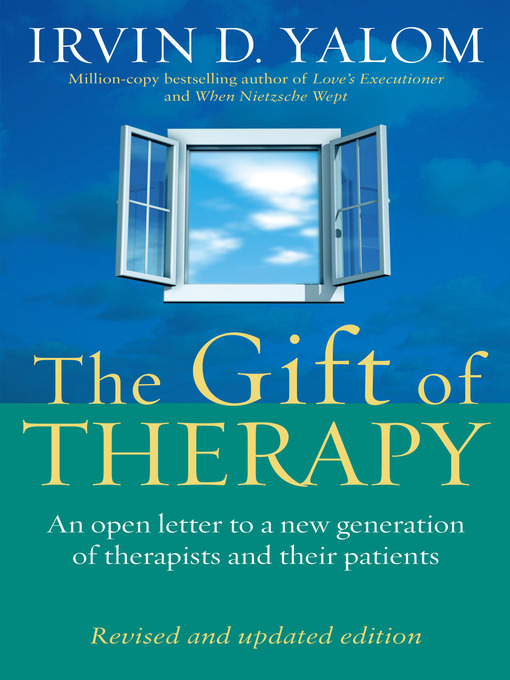
Book Recommendation: The Gift of Therapy by Irvin D. Yalon


As clinicians, once we get started in the field, we often spend our time and energy focusing on the more advanced clinical and counseling techniques. We learn the basics, then often move swiftly away from them in an attempt to refine our clinical skills and be more adept at working with more severe cases, as well as preparing ourselves for diagnostic, demographic, and pathologic diversity–which is a good thing. Yet clinicians can digress away from the place that they were in when they started in the field, which can include their reasons and motivations for choosing a career in the field.


The Gift of Therapy is an excellent way for seasoned clinicians to recapture some of the“magic” that they felt as a rookie in the field, idealistically hoping to transform the world into a tremendously better place one individual at a time. Additionally, it is an excellent place to start for those that are new in the field, and even those that are considering becoming a part of the field.


Faisal Roberts, MA
WKPIC Doctoral Intern



Friday Factoids: APA’s Psychotherapy Series is a Great Resource


APA’s Theories of Psychotherapy Series are like CliffsNotes for the different models of psychotherapy. The series has a book for many psychotherapy models written by master clinicians in that type of therapy. The books are affordable and concise, which makes them an excellent starting place when you want to learn more about a certain model or want to stay current on the different models popular today.


Current books include:

  • Acceptance and Commitment Therapy (Hayes & Lillis, 2012)
  • The Basic of Psychotherapy: An Introduction to Theory and Practice (Wampold, 2010)
  • Behavior Therapy (Antony & Roemer, 2011)
  • Brief Dynamic Therapy (Levenson, 2010)
  • Career Counseling (Savickas, 2011)
  • Cognitive Therapy (Dobson, 2012)
  • Cognitive-Behavioral Therapy (Craske, 2010)
  • Emotion-Focused Therapy (Greenberg, 2011)
  • Existential-Humanistic Therapy (Schneider & Krug, 2010)
  • Family Therapy (Doherty & McDaniel, 2010)
  • Feminist Therapy (Brown, 2010)
  • Interpersonal Psychotherapy (Frank & Levenson, 2011)
  • Narrative Therapy (Madigan, 2011)
  • Person-Centered Psychotherapies (Cain, 2010)
  • Psychoanalysis and Psychoanalytic Therapies (Safran, 2012)
  • Psychotherapy Integration (Stricker, 2010)
  • Rational Emotive Behavior Therapy (Ellis & Ellis, 2011)
  • Reality Therapy (Wubbolding, 2011)
  • Relational-Cultural Therapy (Jordan, 2010)


Danielle M. McNeill, M.S., M.A.
WKPIC Doctoral Intern


Friday Factoids: Passing on the Wisdom

Here’s a list of must-knows when applying to our site, or coming to WKPIC for internship!


1.            Paula Halcomb, director of the Admissions Unit at WSH, is our resident restaurateur. If you want to know where to eat in the area, and even what to order when you get there, talk to Paula. She can also help you find obscure objects in the area, such as where to go when you want to buy used vinyl records.


2.            Dr. Ralph Greene at WSH is our very own statistician. He has helped a few of us out with our dissertation stats, but he doesn’t like to advertise.


3.            Dr. Susan Vaught, director of the psychology department at WSH and the internship director of clinical training, is a neuropsych genius. If you have a question about testing or a challenging case, just tell her the symptoms (one or two symptoms will do) and she will tell you exactly where the neurological damage is localized.


4.            Hopkinsville, KY is home to quit a few delicious and unique restaurants. It was surprising to find such good eats around our small town and these hidden jewels are must-haves for foodies.

•             Da Vinci Little Italian – European owner and chef serves authentic Italian food, which is seriously the best Italian food you will ever have outside of Italy. The restaurant stays packed on weekends so make a reservation.

•             Ferrell’s Hamburgers – Best hamburgers in town and for a good price.

•             El Bracero – Don’t waste your time trying to find your favorite Mexican restaurant, just go to Bracero. There are two locations, one in Hopkinsville and one in Clarksville, TN.

•             Whistle Stop Donuts – Bring these to work and you’ll soon favorite. There are two locations, one in Hopkinsville and one in Clarksville, TN.


5.            Clarksville, TN is a short drive south and home to many restaurants. Black Horse Pub & Brewery has amazing steaks and pizzas.


6.            Farmers’ Markets! There are two close by, one in downtown Hopkinsville that is open Wednesdays and Saturdays, and one in downtown Clarksville, TN that is open Saturdays.


7.            Contrary to popular belief, we are not land-locked. There are many parks with river access in the area, and two large lakes a short drive north. The Land Between the Lakes (LBL) recreational area has many water-sport and fishing opportunities. There are even trails for Jeeps/ATVs and a bison and elk reserve to tour.


8.            Culture! Despite the small town, there is much diversity in the area that we can probably attribute to the nearby large Army post, Fort Campbell, located in Oak Grove, KY and Clarksville, TN (yep, it’s that big). There are several museums in the area and you can enjoy great musicals and plays at Roxy Regional Theatre in Clarksville, TN.


9.            Most, if not all, staff at WSH can be bribed with food and/or coffee.


10.          The ladies at Pennyroyal Center in Greenville frequently have pot-luck lunches during the work week. Get ready for some yummy home-cooked food!


Danielle M. McNeill, M.S., M.A.
WKPIC Doctoral Intern


Friday Factoids: The Skills System


Julie F. Brown has modified DBT techniques for use with individuals with intellectual disabilities. The Skills System is comprised of skills and tools for effectively managing emotions, thoughts, and actions. Her guide for clinicians, The Skills System Instructor’s Guide: An Emotion Regulation Skills Curriculum for All Learning Abilities (2011) can be purchased through Amazon.


See her website www.theskillssystem.com for more information about this practical approach. Several psychologists in our department have been trained on this system and are finding it extremely useful in our work at the hospital.


Danielle M. McNeill, M.S., M.A.
Doctoral Intern
Western State Hospital